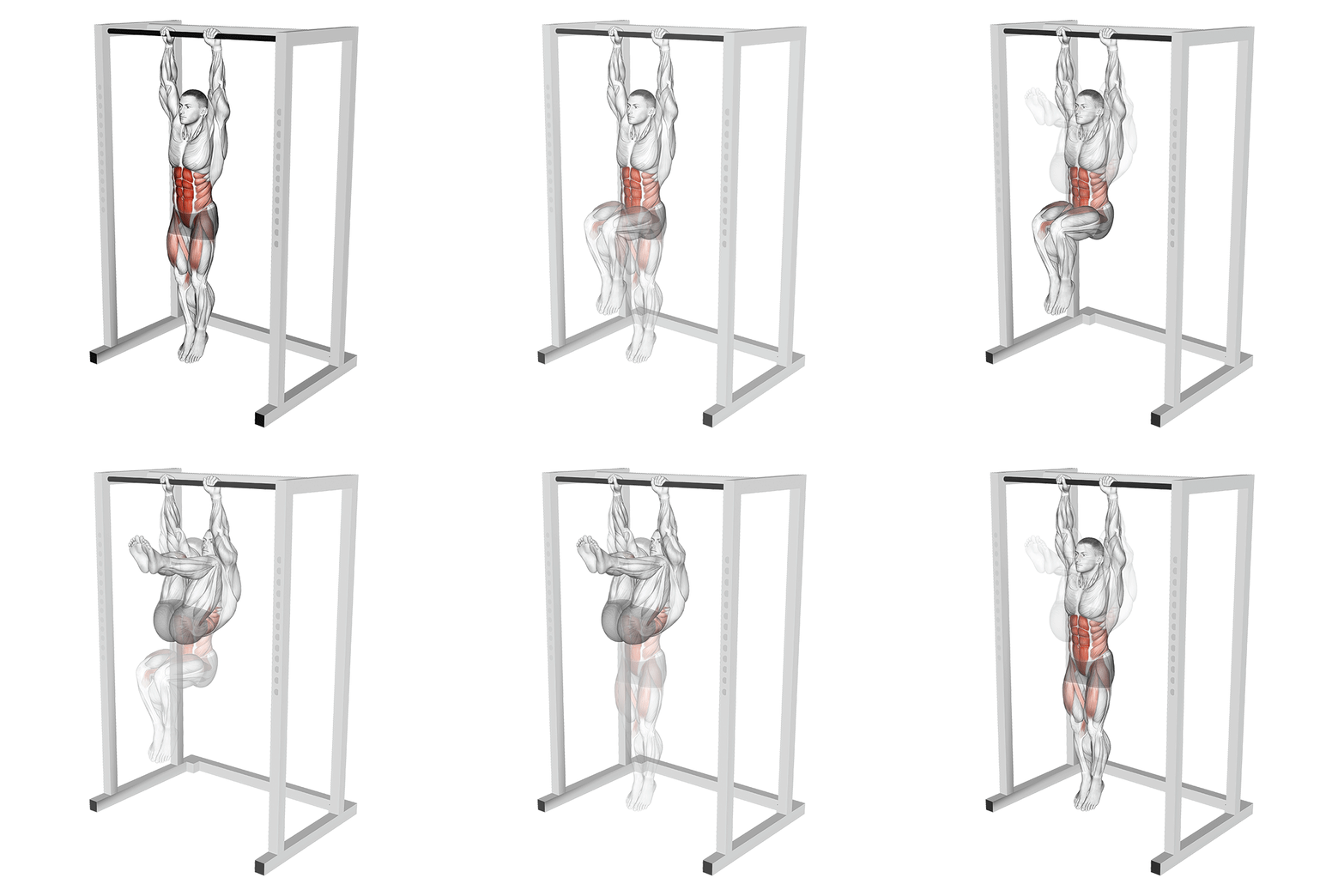
What is the hanging knees to elbows?
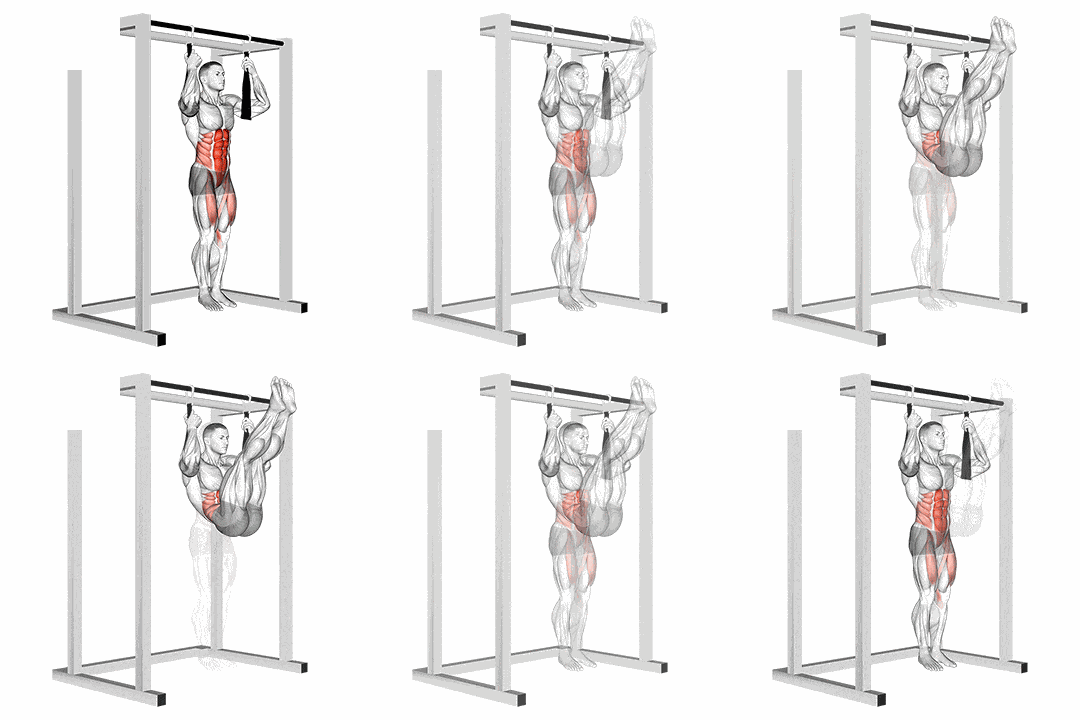
Hanging knees to elbows is a vertical compound abs exercise. From a dead hang on a pull-up bar, you flex the hips, curl the pelvis up, and bring the knees all the way up to touch the elbows. It trains the rectus abdominis, the hip flexors and the lats in one go, while loading the grip and shoulders for as long as the set lasts. It's a CrossFit staple because it's hard to fake and scales nicely toward the toes-to-bar progression. Once you can do it strict, it becomes one of the most efficient core movements for athletic populations.
How to do the hanging knees to elbows
- 1
Hang active, not passive
Grip the bar shoulder-width, palms forward. Pull the shoulder blades down and back, ribs tucked. Don't hang dead from the joints.
- 2
Initiate with a posterior tilt
Curl the pelvis up first. The lower abs start the movement before the hip flexors take over.
- 3
Drive knees to elbows
Pull the knees up and forward until they touch the elbows. Aim to make actual contact, not approximate it.
- 4
Lower with control
Reverse the movement over two seconds. No swinging at the bottom, no kip unless that's the goal.
Pro tip
If your knees only get to belly-button height, your problem is rarely abs, it's grip endurance and lat engagement. Train hangs and hollow holds on the side and the rep ceiling will climb fast.
Common mistakes
Kipping every rep.
Swinging the body up makes the abs barely work. Build strict reps first, add kip only for conditioning.
Hips never tilt.
Pulling the knees up with the hip flexors alone leaves the abs untouched. Start with the pelvic curl.
Short range, half reps.
Stopping at chest height is a different exercise. Either touch the elbows or scale to a hanging knee tuck.
Grip giving out first.
If the hands fail before the abs, use straps for one or two sets to expose the real weakness, then train grip on the side.
Variations and progressions
Easier
Hanging knee tuck
Bring the knees up to chest height instead of to the elbows. Build strength here before the full version.
Harder
Toes to bar
Keep the legs straight and bring the toes up to the bar. The straight-leg lever loads the abs much harder.
No pull-up bar?
Captain's chair knees to chest
Use a captain's chair to remove grip demand and isolate the abs. Same movement, lower threshold.
How to program it
Three protocols by goal. Pick one per cycle and aim for progression on load or distance.
| Goal | Sets × distance | Load | Rest |
|---|---|---|---|
| Strict strength | 4 × 6-8 | Bodyweight, strict | 2 min |
| Hypertrophy | 3 × 10-12 | Bodyweight or ankle weights | 90 s |
| Metcon | 5 × 15 (kipping OK) | Bodyweight | 60 s |
Hanging Knees to Elbows FAQ
Strict or kipping?
Strict for strength and hypertrophy, kipping for conditioning and metcons. A solid base of strict reps means your kipping reps will be cleaner and safer when you do them. The opposite is not true. Build strict first, then add the kip only when you can hit eight to ten clean strict reps.
My shoulders hurt at the bottom of the hang.
Almost always a passive-hang problem. If you let the shoulders shrug up to the ears, the joint compresses and shouts. Active hang means scapulae pulled down and back before the first rep, and held there through the whole set. If pain persists with active hang, train scapular pull-ups for a few weeks before returning.
How does it compare to toes-to-bar?
Toes to bar is harder because the legs stay straight, which is a much longer lever. Knees to elbows is the natural progression toward it. Most lifters should be able to do solid strict knees to elbows for sets of eight before chasing toes to bar, otherwise the form breaks down and the lower back complains.