What is the elliptical?
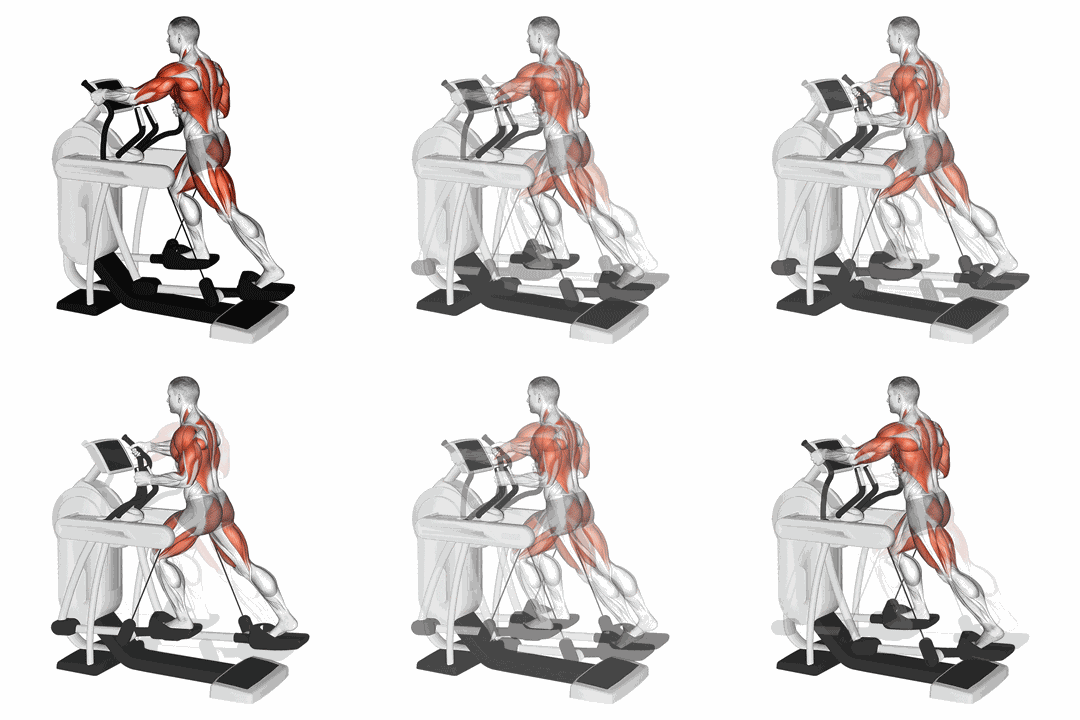
The elliptical is a stationary cardio machine with two foot pedals and two moving handles. The feet trace an oval path that mimics running without the ground impact. You can push the handles for an upper body assist or hold them lightly and let the legs do the work. With the right resistance and stride, the elliptical produces a heart rate response equivalent to running at the same RPE, while sparing the joints. It is one of the best tools for active recovery and zone-2 training.
How to do the elliptical
- 1
Set the position
Stand tall, feet centred on the pedals, hands light on the moving handles. Chest up, eyes forward, slight forward lean.
- 2
Pick a resistance
Set the machine so you can hold a 70 to 80 rpm cadence without spinning out. Too light feels like nothing, too heavy turns the move into a leg press.
- 3
Drive evenly
Push down through the mid-foot, pull the handle on the opposite side. The motion should look smooth, not jerky.
- 4
Breathe with cadence
In zone 2, you should be able to speak full sentences. If you cannot, drop the resistance or cadence until you can.
Pro tip
Don't grip the handles like a drowning swimmer. Light contact is enough; the legs are the engine. White-knuckle grip raises blood pressure and steals oxygen from the lower body.
Common mistakes
Resistance way too low.
Spinning at 100 rpm with no resistance burns very little. Set the resistance so the heart rate matches the target zone.
Leaning on the handles.
Hanging body weight on the arms inflates the calorie display and cuts the leg work. Stand tall, light hands.
Toes only.
Pushing off the toes shortens the stride and overloads the calves. Drive through the whole foot.
Same setting every session.
Stagnant resistance gives stagnant fitness. Add one level every 2 weeks or alter the interval shape.
Variations and progressions
Easier
Zone-2 steady state
30 to 45 minutes at conversational pace (heart rate roughly 60 to 70 percent of max). Pure aerobic base building.
Harder
30/30 intervals
30 seconds high resistance hard, 30 seconds light recovery, 10 to 20 rounds. Stimulates VO2 max with zero impact.
Alternative
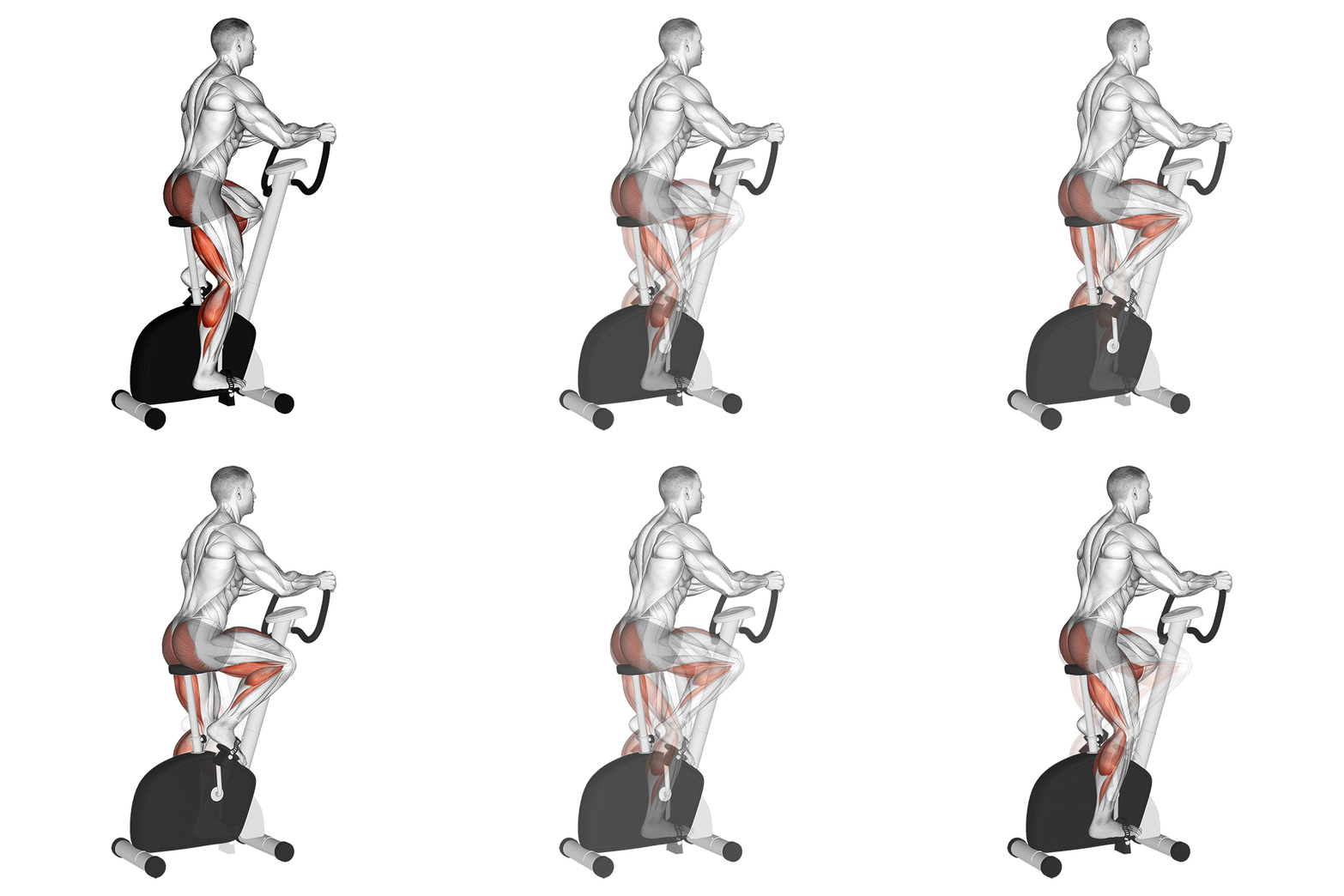
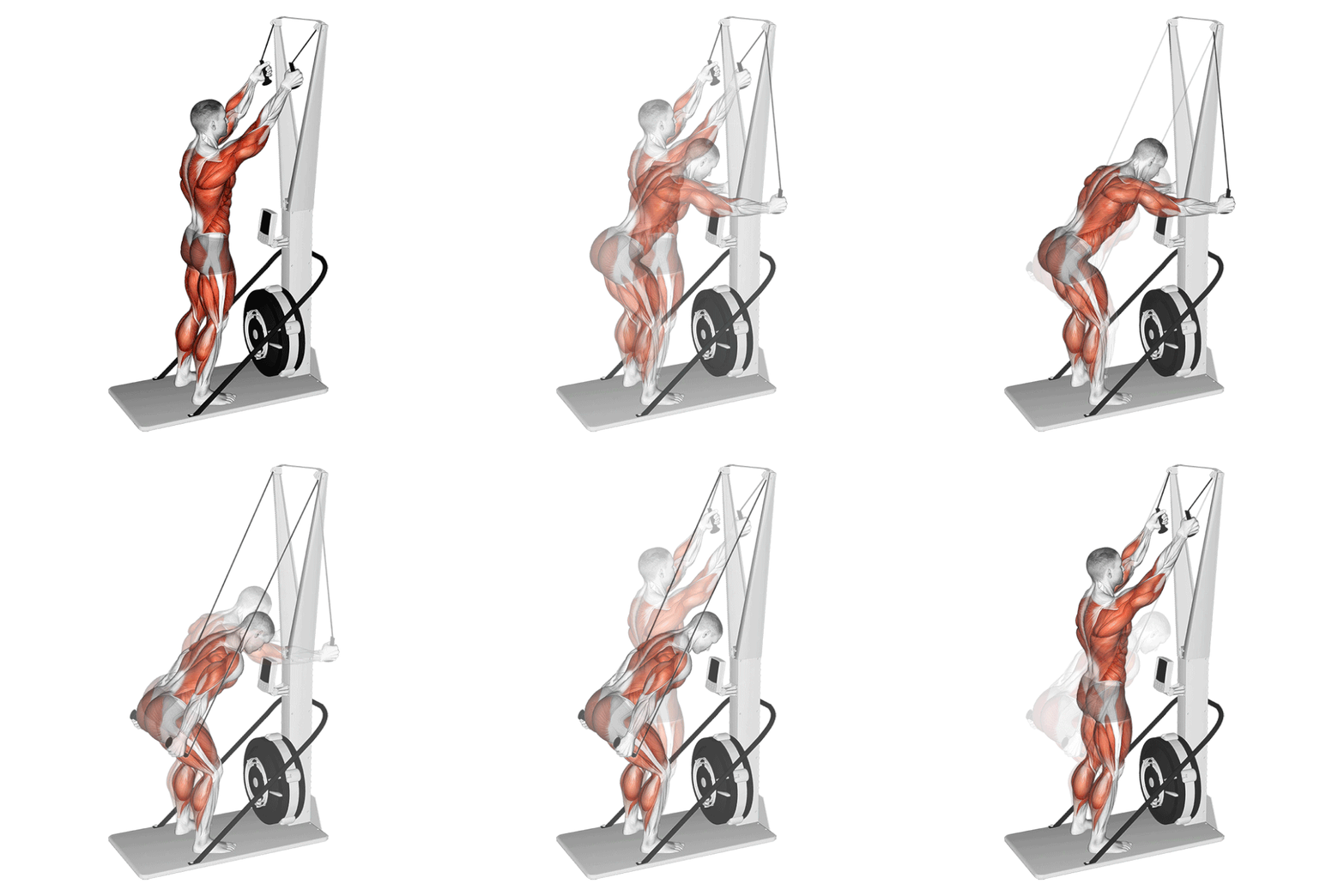
Stationary bike or skierg
Same aerobic stimulus, different muscle bias. Use the bike on heavy upper body days, the SkiErg when you need more arm work.
How to program it
Three protocols by goal. Pick one per cycle and aim for progression on load or distance.
| Goal | Sets × distance | Load | Rest |
|---|---|---|---|
| Active recovery | 20 min easy | RPE 4, conversational | None |
| Zone 2 base | 45 min | 70-75% HR max | None |
| VO2 intervals | 12 × 30/30 | Hard / easy | Active 30 s |
Elliptical FAQ
Is the elliptical as good as running?
For pure cardiovascular fitness, yes. Studies comparing running and elliptical at matched RPE show equivalent VO2 max gains in 8 to 12 weeks. What it does not replace is the bone density and tendon stiffness that come from ground impact. If you race running events, you still need to run. If you train for general fitness or recover from injury, the elliptical is a full substitute.
Why don't I sweat on the elliptical?
Almost always because the resistance is too low. Many machines start at a setting that feels like walking on the moon. Crank the resistance to a level where you can hold 75 rpm and breathe heavily. If the calorie counter is shooting up without the heart rate, you are coasting.
Forward or backward stride?
Forward is the default and biases the glutes, hamstrings and calves. Backward shifts more work to the quads and is a useful change of stimulus for variety, but it is harder on the knees of some athletes. Use forward for 80 percent of the volume and backward as a short stimulus block.