What is the cat-cow?
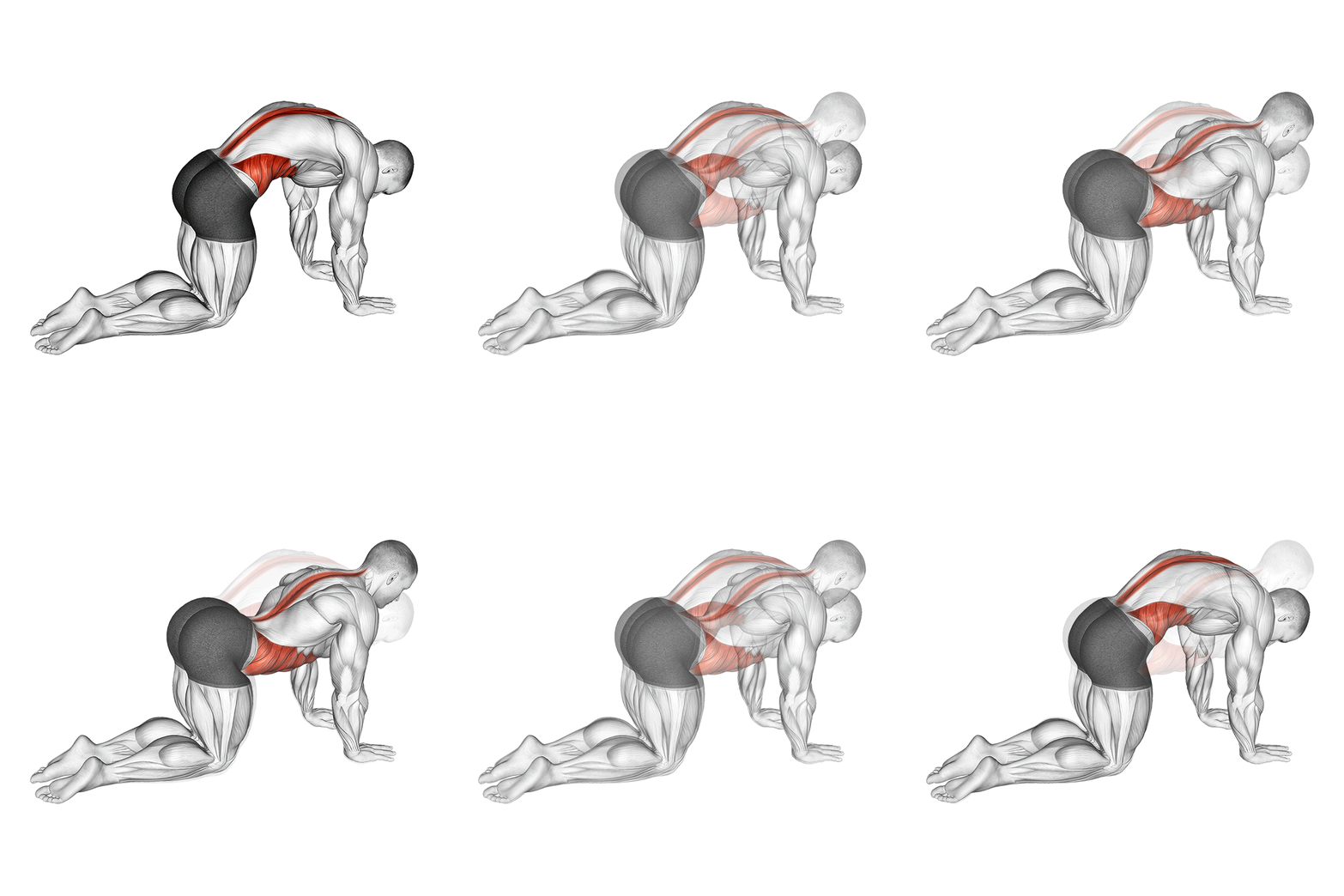
Cat-cow is a quadruped spinal mobility drill borrowed from yoga. On hands and knees, you alternate between two shapes: cow (belly drops, chest opens, eyes up) and cat (back arches, head tucks, navel pulls in). The vertebrae move one by one, the diaphragm gets a fresh excursion, and the surrounding muscles wake up. It is the single best warm-up move before any lifting or running session and costs nothing.
How to do the cat-cow
- 1
Set the quadruped base
Knees under hips, hands under shoulders, fingers spread. Neutral spine, neck long, weight even across both hands.
- 2
Inhale into cow
Drop the belly toward the floor, lift the chest and look slightly up. Feel the front body open vertebra by vertebra.
- 3
Exhale into cat
Push the floor away, round the upper back, tuck the chin and pelvis. Pull the navel up like a thread to the ceiling.
- 4
Move with the breath
One full cycle per breath: inhale to cow, exhale to cat. Aim for 8 to 12 cycles, slow and full. No bouncing.
Pro tip
Slow it down until each cycle takes 8 seconds. Most athletes flick through in 2 seconds and miss the whole point: vertebra-by-vertebra articulation, not just an end-range shape.
Common mistakes
Moving from the head only.
If the head leads and the spine follows late, you mobilise the cervicals and forget the thoracic. Initiate from the mid-back.
Hyperextending the lumbar.
Dropping the belly until it hurts pinches the lower back. Stop where the front body opens without strain.
Locked elbows.
Hyperextended elbows lock the shoulders and limit the thoracic motion. Soften the elbows a touch and push the floor.
Holding the breath.
Cat-cow is breath-led. If you forget to inhale and exhale, you lose half the value of the drill.
Variations and progressions
Easier
Seated cat-cow
Sit on a chair, hands on thighs, perform the same articulation. Great for office breaks or limited knee mobility.
Harder
Thread the needle add-on
After cat-cow, slide one arm under the body and rotate the thoracic. Adds rotation to flexion and extension.
Wrist pain?
Forearm cat-cow
Drop to the forearms instead of hands. Same spinal articulation with zero load on the wrists.
How to program it
Three protocols by goal. Pick one per cycle and aim for progression on load or distance.
| Goal | Sets × distance | Load | Rest |
|---|---|---|---|
| Daily warm-up | 1 × 10 cycles | Bodyweight | None |
| Pre-lift mobility | 2 × 8 slow | Bodyweight | 30 s |
| Desk-break protocol | 5 cycles every 90 min | Bodyweight | None |
Cat-Cow FAQ
Does cat-cow actually help low back pain?
Yes for most non-specific low back pain. The McGill and yoga literature both show that gentle spinal articulation reduces stiffness, improves disc nutrition and lowers pain scores in 2 to 6 weeks. It is not a cure for structural problems but it is one of the safest first-line drills you can do daily.
How often should I do cat-cow?
Daily, ideally twice. Once as part of the morning routine to wake up the spine, once as part of the warm-up before training. Two minutes total. The cumulative effect of small daily exposure beats a long session once a week.
Can I do it during pregnancy?
Generally yes and it is widely taught in prenatal yoga to relieve lower back load. Avoid extreme end-range cow (deep belly drop) in the second and third trimesters and check with the healthcare provider if there is any specific condition. Slow, breath-led cycles in a moderate range are the safest pattern.