
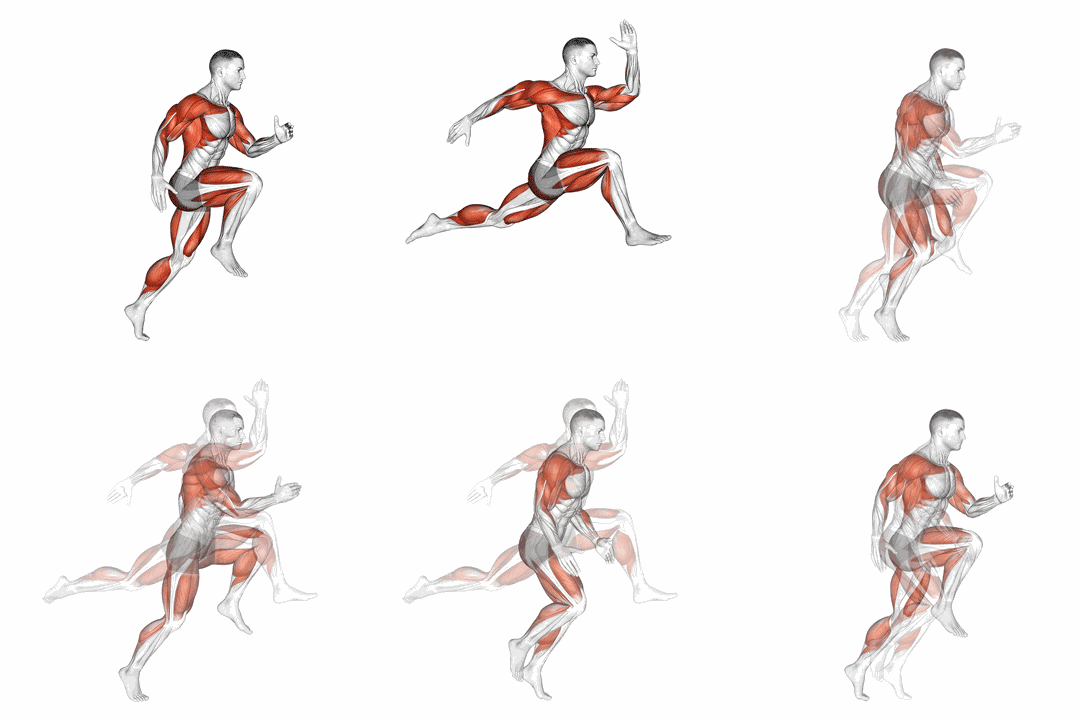
What is the sprint?
A sprint is running at 90 percent or higher of your absolute top speed. Sessions usually live in the 10 to 60 metre range, with 2 to 5 minutes rest between reps to allow full CNS recovery. Sprinting builds fast-twitch fibres, tendon stiffness, hip extension power and conditioning that no zone-2 jog comes close to matching. It is also high-injury if you arrive cold or fatigued; always treat it as a strength session, not cardio.
How to do the sprint
- 1
Warm up thoroughly
15 to 20 minutes minimum: easy jog, dynamic mobility, drills (A-skips, B-skips), then 3 to 4 build-ups at 60, 70, 80, 90 percent.
- 2
Drive phase: low and forward
First 5 to 15 metres, body angle around 45 degrees, push the ground backward aggressively with each step. Do not stand up too early.
- 3
Top speed: tall and cycling
Once upright, stay tall, drive the knees up, paw the ground down and back. Arms swing front pocket to back pocket, fast and relaxed.
- 4
Decelerate over distance
Never slam the brakes. Let speed bleed off over 20 to 30 metres after your finish line to protect hamstrings.
Pro tip
If you cannot maintain at least 95 percent of your first rep speed by rep 6, the session is done. Quality drops fast, injury risk does not.
Common mistakes
Sprinting cold.
Hamstring tears love unwarmed sprints. Minimum 15 minutes prep plus build-ups, no exceptions.
Too little rest.
Short rest turns sprints into intervals. True sprints need 2 to 5 minutes between efforts so the CNS is fresh.
Standing tall too early.
Popping upright in the first three steps kills your acceleration. Stay angled until you reach near top speed.
Reaching with the foot.
Striking the ground in front of your hip brakes you. Foot lands under or slightly behind the centre of mass.
Variations and progressions
Easier
Tempo run
75-85 percent strides of 50 to 100 metres. Builds running mechanics with much lower injury risk.
Harder
Resisted sprint
Sled or band-resisted sprints over 10 to 20 metres. Build acceleration power without losing speed quality.
Indoor option
Bike or rower sprint
10 to 20 second all-out efforts on assault bike or rower. Same energy system, far lower injury risk for beginners.
How to program it
Three protocols by goal. Pick one per cycle and aim for progression on load or distance.
| Goal | Sets × distance | Load | Rest |
|---|---|---|---|
| Acceleration | 8 × 20 m | Bodyweight, 95-100% | 2-3 min |
| Top speed | 6 × 40 m flying | Bodyweight, 100% | 4-5 min |
| Speed endurance | 5 × 60 m | Bodyweight, 90-95% | 3 min |
Sprint FAQ
How often should I sprint?
One to two true sprint sessions per week, separated by at least 72 hours. Sprinting is a CNS-intensive activity that recovers more like heavy lifting than cardio. More than two sessions a week without an aggressive recovery plan tips you into injury territory quickly.
Will sprinting make me bulky?
Sprinting builds dense, functional muscle in the glutes and hamstrings, not bodybuilder-style mass. Look at any elite 100 metre sprinter: athletic, lean, powerful. The physique is a byproduct of fast-twitch development, not bulk in the bodybuilding sense.
Can I sprint if I have not run in years?
Not yet. Build at least four to six weeks of easy running, then add strides (75 to 85 percent over short distances) for another two to four weeks. Only then progress to full sprints. Tendons and connective tissue adapt slower than the cardiovascular system; rushing this stage is the classic recipe for a torn hamstring.
